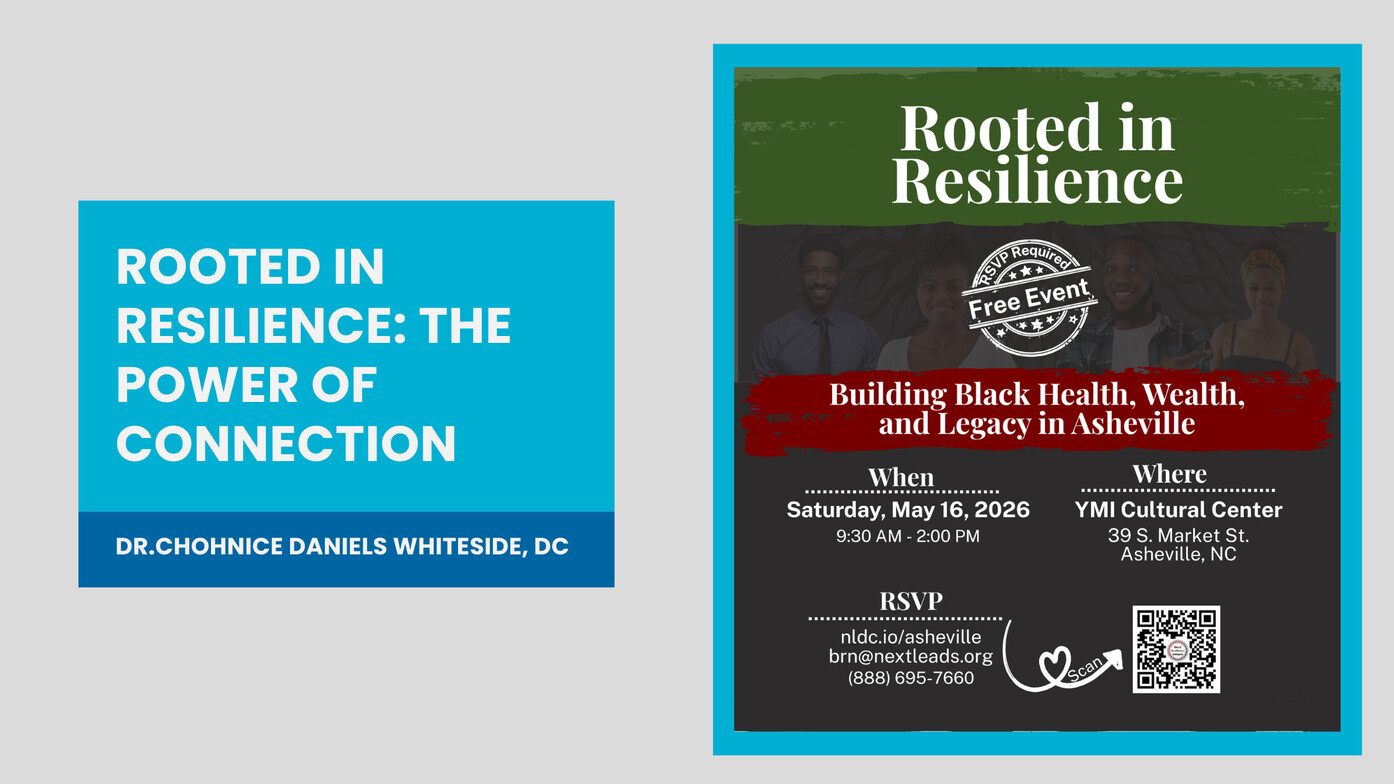
A few weeks ago, I had the privilege of attending and serving as a panelist at the Rooted in Resilience conference. While the event covered topics ranging from health and wealth to history and community preservation, I left with one overwhelming takeaway:
Everything is connected.
As a chiropractor and nutrition professional, I spend much of my time helping people understand how the body works as an integrated system. No organ functions alone. No system functions alone. What affects one part of the body inevitably affects another.
What I didn't expect was how beautifully that same principle would show up throughout every panel discussion.
Connection Through Food
The first panel focused on health, and the conversation began with Shuvonda Harper from Southside Community Farm discussing food accessibility and the importance of knowing where our food comes from.
One comment in particular stuck with me.
She explained that when our fruits and vegetables travel across the country, they often require additional processing, preservation methods, or harvesting practices that allow them to survive the journey. Her point wasn't to discourage healthy eating, but rather to encourage us to become more connected to our food sources whenever possible.
As someone who loves avocados, this immediately hit home. Avocados are one of my favorite foods, and they're certainly not growing in my backyard in Western North Carolina.
While I've always understood the importance of nutrition, this conversation served as a much-needed reminder that health isn't just about choosing fruits and vegetables. It's also about understanding where those foods come from and how they're produced.
In fact, one of the biggest takeaways from the conference has inspired a new goal for my family. Over the coming months, I'll be starting a small backyard garden with some of the staples we use most frequently, including strawberries, blackberries, cucumbers, cherry tomatoes, and Roma tomatoes.
I'm sure there will be plenty of lessons along the way, and I'm excited to share that journey with all of you.
Because the more connected we become to our food, the more intentional we become about our health.
Connection Through Thoughts, Toxins, and Trauma
When it was my turn to speak, I originally planned to discuss Type 2 diabetes and cardiovascular health. While those topics are incredibly important, something felt more aligned that day.
Instead, I chose to talk about how our thoughts, toxins, and traumas shape our health.
As Black Americans, we are no strangers to trauma. Some trauma is personal. Some trauma is generational. Some trauma is inherited through stories, experiences, and systems that existed long before we were born.
What many people don't realize is that trauma doesn't simply affect our emotions. It affects our biology.
Our thoughts influence our hormones. Chronic stress influences inflammation. Repeated exposure to adversity changes the way our bodies adapt and respond to the world around us.
Health is not simply physical.
Health is emotional.
Health is mental.
Health is environmental.
This is one of the reasons events like Rooted in Resilience are so important. They don't simply provide information. They create connection. They remind us that we are not carrying our burdens alone.
I also discussed the importance of reducing unnecessary toxic exposures in our homes.
One example I shared was commercial oral care products. Many people never consider how certain ingredients found in toothpaste and mouthwash can affect the oral microbiome. Yet the mouth serves as one of the first gateways into the digestive system, and disruptions to the oral microbiome can influence the gut microbiome and overall health.
Again, everything is connected.
The products we use.
The foods we eat.
The thoughts we think.
The stress we carry.
None of these exist in isolation.
Mental Health Is Health
The final speaker on our health panel, Jasmine Moore, discussed Black maternal health outcomes and the stigma that often surrounds conversations about mental health within Black communities.
At one point, she had the entire room repeat a simple phrase:
"Mental health is health."
Those words resonated deeply with me because they reinforced a point I had just made during my presentation.
Too often we separate physical health from mental health when they are inseparable.
Our thoughts influence our physiology. Our emotions influence our nervous system. Our stress influences our immune system. Mental health is not separate from health—it is health.
The room seemed to collectively recognize the truth in that statement.
And perhaps that is what resilience truly requires: acknowledging every aspect of our well-being instead of only addressing the parts we can see.
Building Wealth, Preserving Legacy
The second panel focused on generational wealth.
The discussion covered investing, homeownership, estate planning, and creating systems that allow wealth to be transferred intentionally to future generations.
One message came through clearly:
Start now.
Build equity.
Hold on to assets.
Create a will.
Make a plan.
We often think of wealth as money, but wealth is really about creating opportunities for those who come after us.
The final panel focused on historical preservation and the importance of protecting our stories, traditions, and cultural contributions.
Just as families pass down financial assets, communities pass down knowledge, history, and identity.
Our stories matter.
Our history matters.
Our legacy matters.
And preserving them requires collective effort.
Rooted in Resilience
As I reflect on the event, I realize that every panel was ultimately discussing the same thing.
Connection.
Connection to our food.
Connection to our bodies.
Connection to our mental health.
Connection to our families.
Connection to our history.
Connection to our community.
Resilience is not built in isolation. It is built through relationships, shared knowledge, and a commitment to supporting one another.
I am incredibly grateful to the organizers, panelists, vendors, and attendees who made this event possible. The conversations were inspiring, the information was valuable, and the sense of community was undeniable.
I left feeling energized, informed, and hopeful.
I cannot wait to attend the second annual Rooted in Resilience conference and continue building connections that strengthen our health, our families, and our community.
Because when we stay connected, we become stronger together.
See below for the official public agenda with information about panelists, sponsoring organizations, and vendors.

Chohnice Daniels Whiteside
Contact Me